

Getting Started
Ensure access to Namespace
Using the CLI, log into your workspace.
If you’re accessing Namespace from a cloud provider or your CI platform, we recommend to set up workflow federation instead.
How it works
Namespace preview clusters build on Namespace Compute to deliver interactive access to a flexible, isolated test environment. Any public images, or any image present in your private container registry can seamlessly run in a preview. Namespace generates public, authenticated ingress URLs using managed TLS certificates, whether you use a Namespace-provided app domain, or employ custom domain configurations.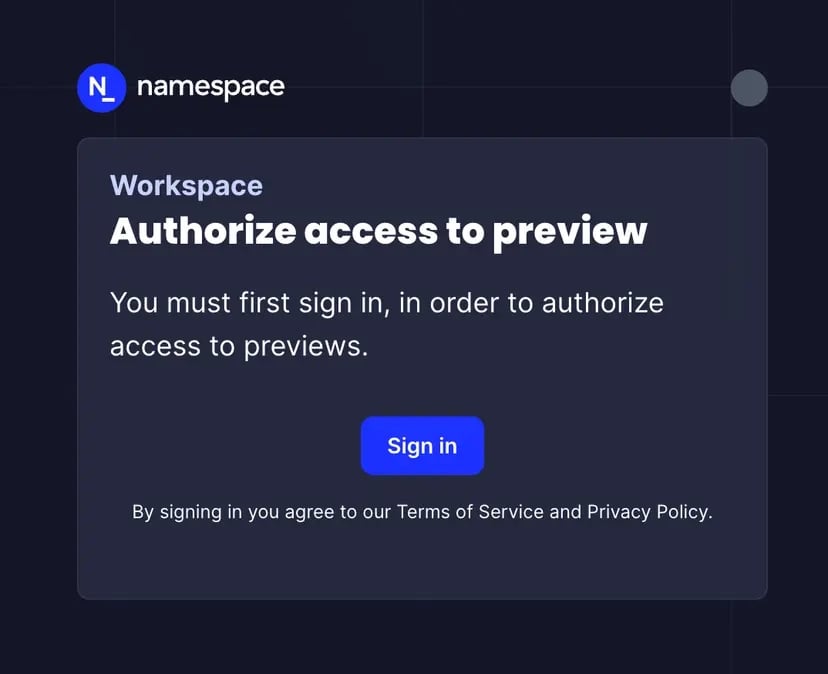
Monitoring and Debugging
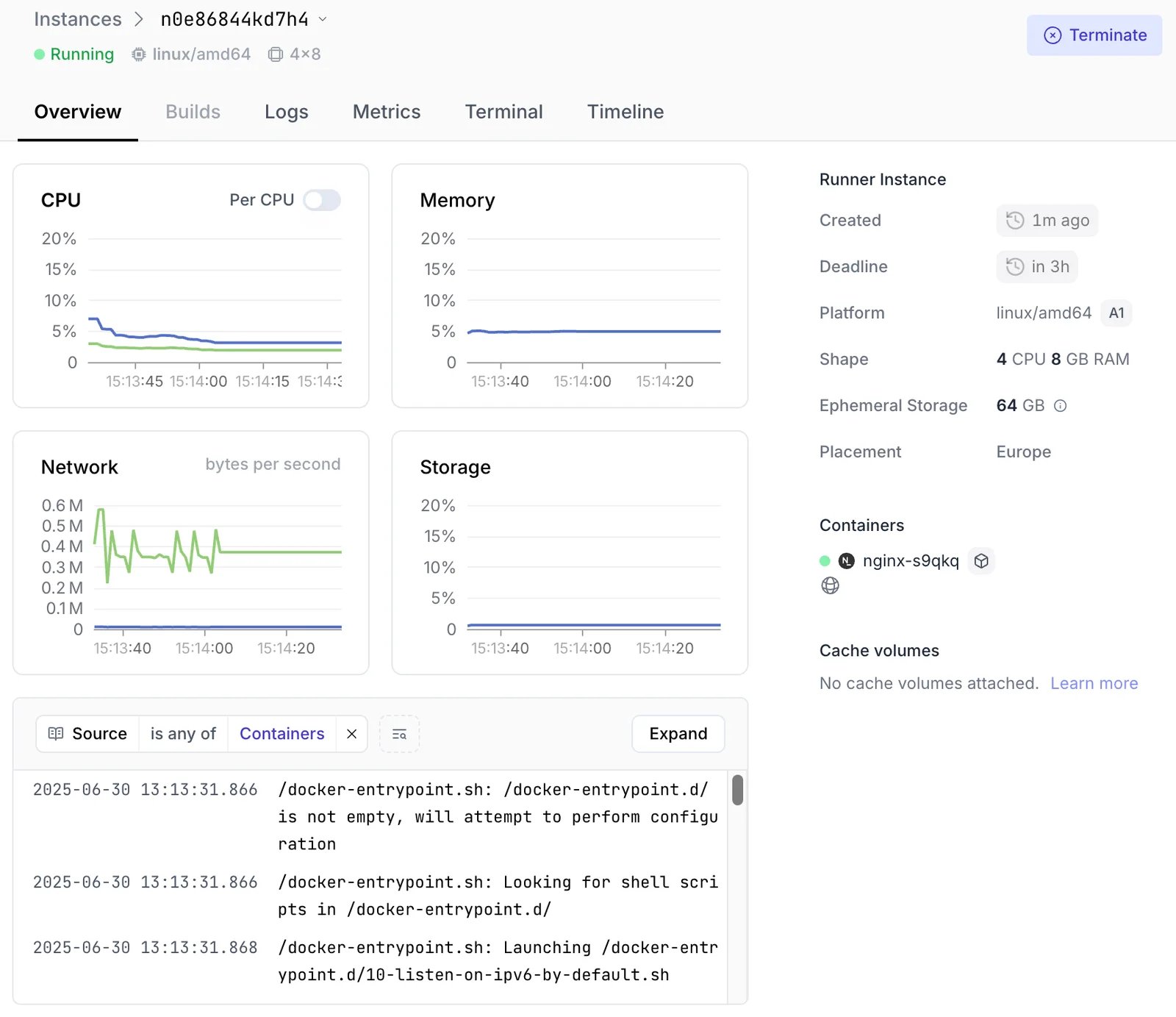
By building on Namespace Compute, you directly benefit from its comprehensive observability features providing deep insights into preview environment performance and behavior.- Real-time Logging Access centralized logs from all pods, from the CLI or the Dashboard.
- Performance Monitoring Track resource utilization and network performance.
Wildcard Ingresses
For complex applications requiring multiple endpoints or dynamic routing, Namespace supports wildcard ingress configurations. Wildcard ingresses excel in scenarios requiring microservice architectures with dynamic service discovery and when testing API gateways managing multiple backend services.Enable wildcard support
Create an instance with wildcard ingress capability.This outputs the ID of the created cluster, e.g.: 072higp5dg0bg
Start your application
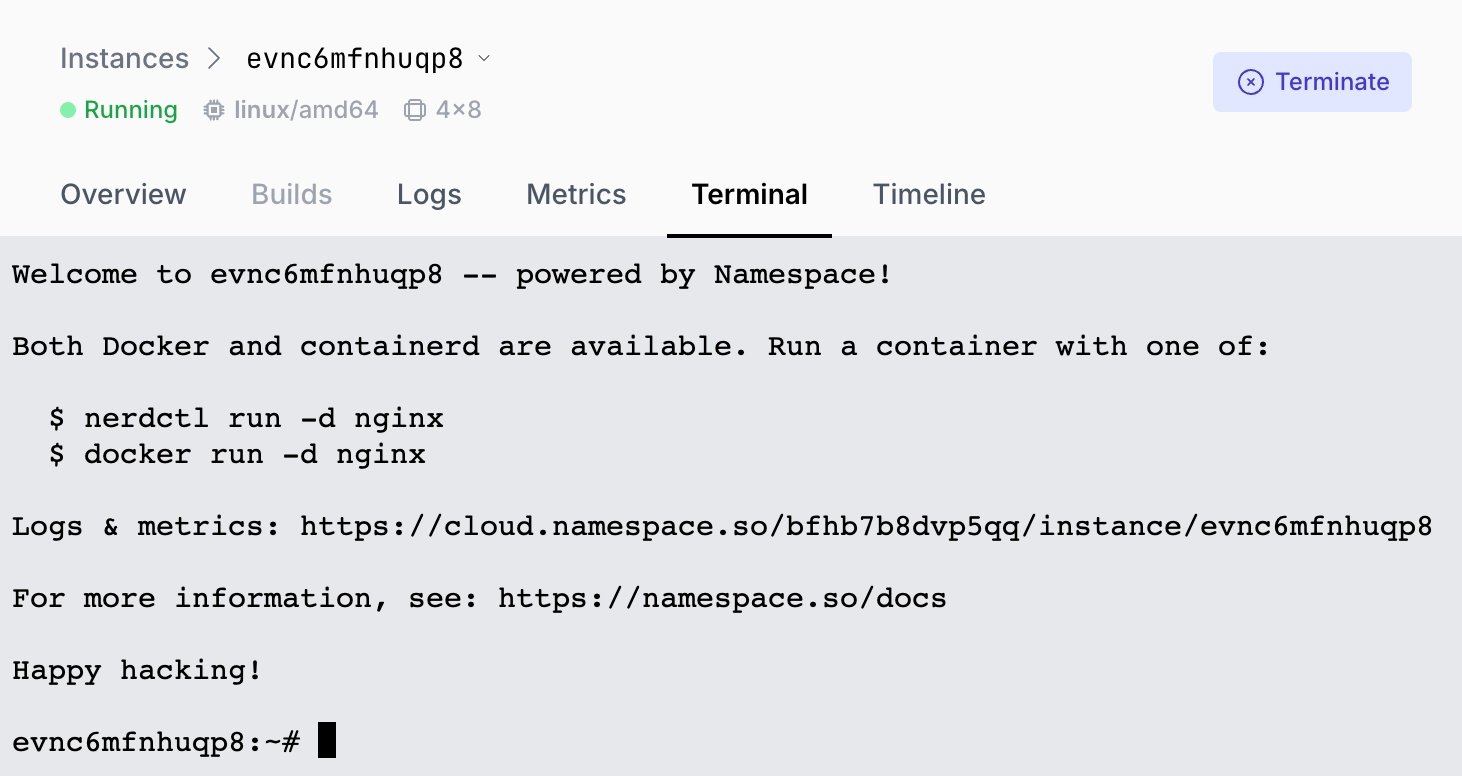
Connect your local Docker to the remote preview environment.Using your existing tooling, you can now run your application in the preview.
*.<instance-id>.<region>.namespaced.app